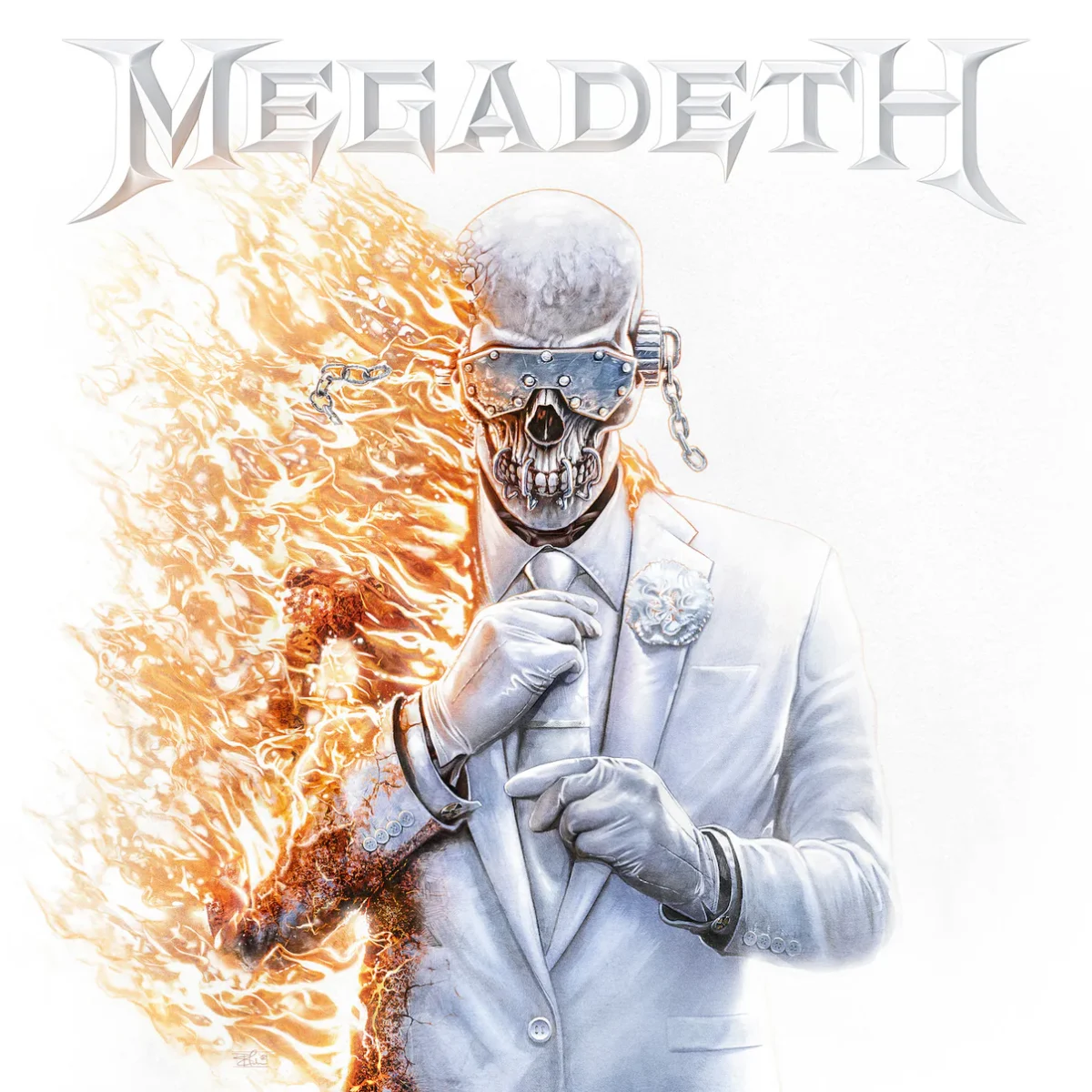
Forty-two years and nineteen studio albums later, Dave Mustaine has hung up his guitar and legendary career in thrash metal with Megadeth’s final, self-titled studio album.
Alongside the band’s current lineup of Teemu Mäntysaari, James LoMenzo, and Dirk Verbeuren, Mustaine’s curation marks the end of one of the most impactful and technical thrash bands to date, effectively summarizing the band’s career, both the good and bad.
While the powerful, heavy guitar riffs and intricate, technical solos have persisted across decades and defined the band’s place in thrash and metal more broadly, this album has its share of cheap and poorly written lyrics, typical of much of the band’s post-classic era sound.
While many tracks on the album evoke the same emotion and recognition as much of the band’s other iconic work, certain tracks’ lack of consistency makes them an unfortunate inclusion in solidifying Megadeth’s legacy in the metal scene.
“Megadeth” opens with “Tipping Point.” The familiar intricate, high-speed guitar riffs that have defined the band’s genre-defining career, paired with Mustaine’s sneering vocals and cynical lyrics, starts the album with a sound familiar to long-time fans. While a skillful and promising start, it’s safe in nature and ultimately uninteresting for a goodbye album.
Unfortunately, the near-promising start fell off with the second track, “I Don’t Care.” While the momentum of the two guitars is maintained through the intricate and fast arrangement, Mustaine’s voice breaks through the guitars immediately, only to deliver lyrics that are far less interesting or skillful than at any other point in the album.
Beyond the vocal and lyrical style employed, the punk-influenced drumming, typical of their later albums, pairs well with the very heavy metal guitar riffs for a satisfying blend between musical styles and is reminiscent of their musical evolution as a band through the decades.
On the other hand, “Hey God?!” employs a vulnerable lyrical style that contrasts Mustaine’s care-free attitude established in the previous track. The result is an insecure and self-deprecating mood.
Similarly, the sharp pivot to this track is reflected in clearer, more melodic guitar solos and simpler riffs accompanied by less raspy, exaggerated vocals. “Hey God?!” takes a step down in heaviness for a better focus on Mustaine’s lyricism and the new thematic idea of insecurity and loneliness.
This pivot is short-lived, however, and the rasp and angst return to Mustaine’s voice for “Let There Be Shred.” The lyrics, tone, and musicality reclaim the confidence and aggression lost in the previous track, resuming the classic thrash metal tone and technique that defined the band.
Mäntysaari and Mustaine’s solos are undoubtedly the highlight of the song, incorporating tonal elements of jazz, paired with the clever religious imagery of the lyrics.
Mustaine’s typically more jocular and ironic tone returns, contrasting the previous track’s plea to be understood, serving as an assertive reflection of the impact he and the band have had on the metal world. However, the best lyrics throughout the song are in its verses, while the chorus feels too juvenile for the band, especially given their reputation for clever political and social commentary.
Undoubtedly, the strongest track and most reflective of their first records thus far is “Puppet Parade.” The opening riff, reflective of 70’s hard rock that the band undoubtedly drew from, especially earlier in their career, overlaid by a second, more intricate and almost bluesy riff creates an immediate energetic feel to the song while the heavy drums and baseline maintain the heavy metal sound.
The aggressive political commentary in the lyrics are emphasized by the dual riffs, one angry and one more melodic, reflecting a state of both hurt and passion. The very 80’s solo is a standout on the album while the slower bridge, followed by a drum lead in, makes the end of the song far more explosive and high-energy, driving the passion and meaning behind Mustaine’s words even deeper.
The steady heavy riff of “Obey the Call” once again reminds you of classic 80’s and 90’s metal, an era defined by Mustaine’s guitar. Following the rather uninteresting vocals behind “Another Bad Day” and “Made to Kill”, this track features the best vocals on the album, highlighting Mustaine’s rasp and almost spoken-word vocal style that pairs nicely with the overwhelmingly sophisticated guitar.
The promising pickup of the album is unfortunately crushed by “I Am War”, featuring a tacky chorus, uninteresting instrumentation, and awkward tempo as a result of the out of place drumming style.
The unoriginal nature of the song feels like a parody made by a satanic-panic preaching critic that hates thrash metal and is a great fall off from the previous track. I left the track feeling genuinely disappointed at the loss of what could’ve lined up for an incredible close out to the band’s career. However, this addition to the album feels lacking, cheap, and lazy.
Yet, the band redeems itself with “The Last Note”, and its inclusion of deep and melodic vocals, bringing eeriness into their sound while the quick strumming leading up to the verse builds back some of the excitement lost waiting for the previous track to be over.
The lyrics are a deep emotional reflection of the state of the band and the conclusion of their final studio album and Mustaine’s deep voice exaggerates this emotion perfectly. The hauntingly melodic solos accompanied by a quick dual solo reflect the mixed emotion brought about through Mustaine’s lyrics about the end of his legendary career.
The double take at the fake conclusion to the song is followed up by another haunting, yet simplistic distorted guitar played under Mustaine’s profession of poetic lyrics that act as a testimony to the band’s impact on not only the music industry, but on his own life.
Closing out the album and the band’s career with their cover of Metallica’s “Ride the Lightening” serves as a much needed end to the decades long friendship and feud as well as a callback to the band’s beginning and pays an earnest tribute to Metallica while having its own Megadeth edge and sound.
In comparison to Metallica’s original version, the two are distinguishable, yet both incredible, documenting Mustaine’s continued growth throughout his career while still highlighting the very skill and passion that Mustaine’s career began with. Though a more sterile adaptation of Metallica’s classic and closeout to the album after the emotionally provocative “The Last Note”, the cover of an iconic song Mustaine co-wrote allows Mustaine to honor his own legacy in metal, reflecting an alternate vision for the song beyond just the blatant differences in Hetfield and Mustaine’s vocals.