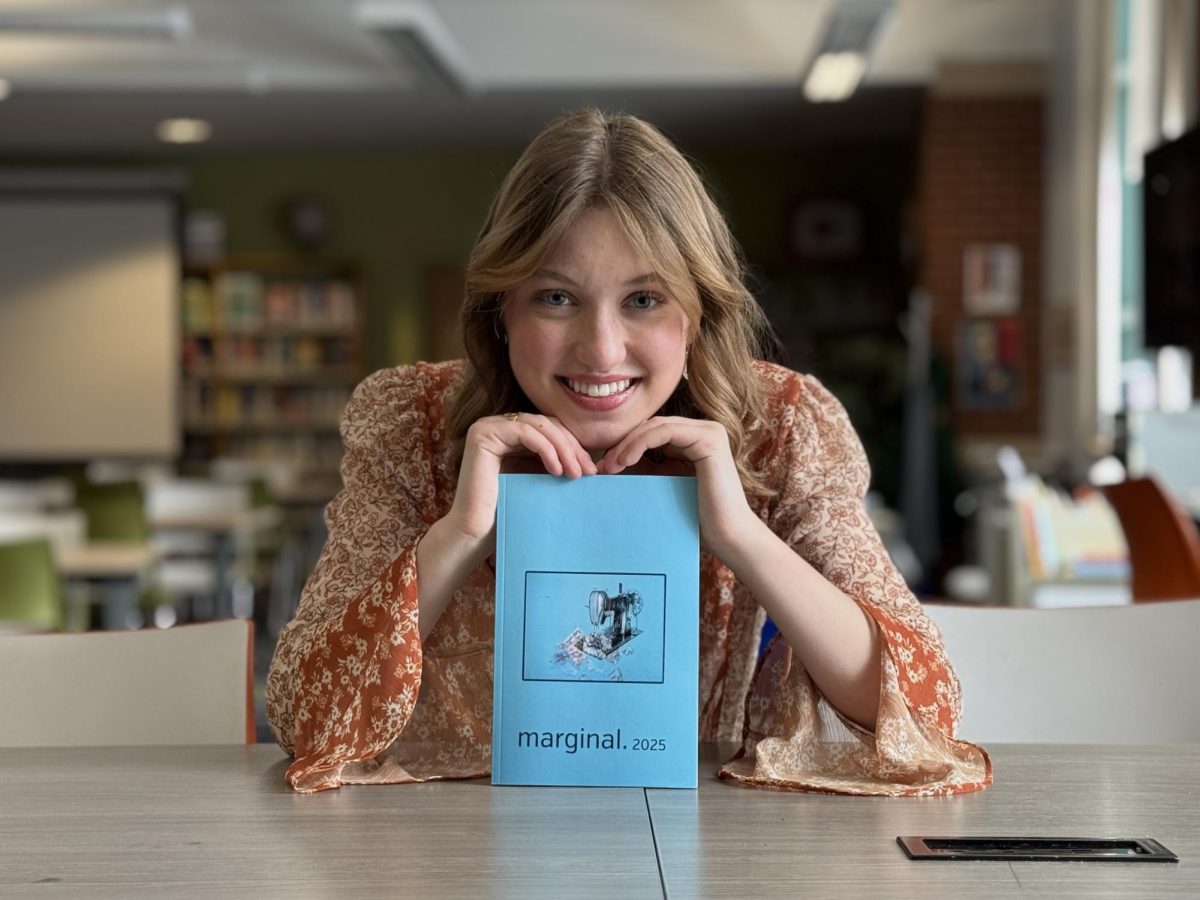
With the conclusion of Maginal’s annual poetry contest this past November, the high school’s talented writers entered the spotlight. This year, first place was awarded to Acadia King’s “Twilight.”
Upon finding out she won, King said she was surprised.
“There are so many incredibly talented writers at this school, so it was definitely unexpected. I was very grateful,” King said.
However, King’s success did not happen overnight. King explained she has always loved to write.
“I think what inspired me as a kid was the fact that I could create a storyline and a whole world of characters that were entirely of my own design,” King said.
While the world-creating aspect of writing has remained, the root of King’s inspiration has broadened, especially when it comes to poetry.
“I continue to be inspired by my feelings and what goes on in my head, as well as other poets,” King said.
Some of King’s current inspirations include poet Langston Hughes and contemporary poet Rupi Kaur. King’s inspiration does not stop there.
“I also love being inspired by small, not well-known, writers who are brave enough to share their writing on social media, because I know that can be scary,” King said.
King’s inspiration is especially evident in her writing. Her winning poem, “Twilight”, centers around a theme of heartbreak, a topic that King describes as “very universal, especially for teens.”
“I wanted to write about the complicated feelings that come with that struggle, because I think a lot of people can relate to it,” King said.
King achieves a sense of inclusivity and resonance in her poems by writing about her personal experiences in a way that is easily digestible for the reader. She aims to make those experiences relatable.
“It’s rare that my poetry has an intended audience. My poetry is usually very personal, so I like to leave it up to the reader’s interpretation rather than share what specifically prompted me to write it,” King said.
Through her writing, King’s goal is “for someone to read my work and think, ‘I’m glad I’m not the only one who feels this way.'”
Inwardly, King describes writing poetry as therapeutic.
“I love that there aren’t many rules. So, I get to exercise lots of creative liberty. It also really helps me organize my thoughts and feelings,” King said.
While King’s poetry can be found in the upcoming 2025 printed edition of Marginal, as well as the Marginal website, King hopes to branch out into different genres with her writing.
“I also plan on writing a short play for the One-Act Play Festival in the spring,” King said.
Outside of writing, King’s main hobbies include theater and the performing arts.
“I love singing, acting, and dancing, and I’m very grateful for the amazing drama program we have here,” King said.
Both performing and writing are fundamental aspects of King’s life.
“I plan to continue both writing and performing in college and beyond,” King said.
Apart from King’s “Twilight,” other works of poetry also won Marginal awards in the contest. With “The Carried,” by Arshia Tharakabhushanam, placed second, and “Ode to Muddy,” by Elise Benson, came in third. and “Symphony of Green,” by Yixuan Li, received an honorable mention. King’s accomplishments and talent in writing are definitely something to take note of.